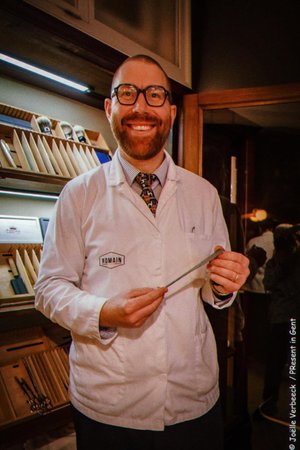
The Straight Razor: History, Anatomy and Proper Handling
For centuries, men have sought effective ways to remove facial hair. Various cultures throughout history used sharp stones and, later, metal blades to achieve a clean shave. The technique of the straight razor as we know it today began to develop in Europe during the 17th century.
By the 18th and 19th centuries, straight razors had become an everyday item for men around the world. However, with the introduction and growing popularity of the safety razor during the 20th century, traditional straight razors gradually fell out of favor.
Today, the straight razor is experiencing a revival. More and more men are rediscovering the pleasure of a high-quality shave and the craftsmanship that lies behind traditional shaving.
Understanding the Anatomy of a Straight Razor
To master the use of a straight razor, it is important to understand its different components.
The Blade
The blade is the long, narrow cutting edge used to shave the hair. It is the working part of the razor and requires proper maintenance to ensure a comfortable shave.
The Back or Spine
Located opposite the cutting edge, the spine serves as a sturdy support for the blade. It also plays an essential role during honing, automatically helping to establish the correct sharpening angle.
The Shoulder
The shoulder is the area where the blade transitions into the spine. It contributes to the overall stability of the razor during shaving.
The Point
Straight razors are available with different point shapes. The shape of the point influences precision and control during detailed work and delicate areas.
The Tang
The tang is the section of the razor used to hold and control the blade. Proper finger placement on the tang contributes greatly to stability and balance.
The Scales
The scales protect the blade when the razor is closed. They can be made from a variety of materials, ranging from plastic and wood to horn, bone, or synthetic composites.
Blade Shapes and Their Influence on the Shaving Experience
The shape and thickness of the blade greatly influence how a razor behaves on the skin.
A half-hollow grind is considered suitable for virtually every skin type and offers an excellent balance between comfort and feedback.
For men with particularly sensitive skin, a full wedge may offer certain advantages. One of the benefits of a heavier blade is its ability to absorb more vibration, resulting in less irritation during the shave. However, a full wedge may not be ideal when shaving over scars or irregularities.
Because every face and every beard is different, experimenting with different razors is often the best way to discover which type suits you best.
In my opinion, beginners are best served with a 6/8 carbon steel razor featuring a round point and a half-hollow grind. This combination offers excellent versatility and is also the type of razor used throughout this course.
How to Hold a Straight Razor
Proper grip is essential for control and safety.
Begin by holding the straight razor in your right hand and carefully unfolding the blade.
Place your three middle fingers on the tang to establish balance. Position your thumb flat against the side of the blade and place your little finger on the tail, or hook, of the razor to increase stability.
Ensure that the thumb and index finger provide a firm grip, allowing for both control and precision throughout the shave.
Left-handed users should simply reverse these instructions.
Throughout this course, all demonstrations are intended for right-handed users. Please note that the techniques shown on the face are presented in a mirrored approach.
Mastering these fundamental principles provides the foundation for every successful straight razor shave. Understanding the history, anatomy, and proper handling of the razor is the first step in preserving one of the oldest and most rewarding traditions in barbering.
The Video Link with Explanation.
Want to join the Scapicchio Academy at ROMAIN in Ghent, belgium?
Get in touch to plan your 1-on-1 training with Master barber Stijn De Sutter and take your straight razor, honing
READY FOR THE REAL THING?
If you want more than just a good story and you’re ready to sharpen your craft (or your own look), you know where to find us.
From straight razor training and honing on natural stone to classic shaves and serious beard work in the chair, ROMAIN Barbershop & Academy in Ghent is where it actually happens—no noise, no shortcuts.
Book a service in ROMAIN
https://booking.optios.net/6064/select-location
Follow the journey
ROMAIN on Instagram: https://www.instagram.com/romain_ghent
Stijn on Instagram: https://www.instagram.com/desutter_stijn
Stijn on YouTube: https://www.youtube.com/@desutter_stijn
Academy info, courses or questions
Email: info@romainghent.be and we’ll take it from there.
Website ROMAIN: http://www.romainghent.be
Website Scapicchio Academy: http://www.scapicchioacademy.com