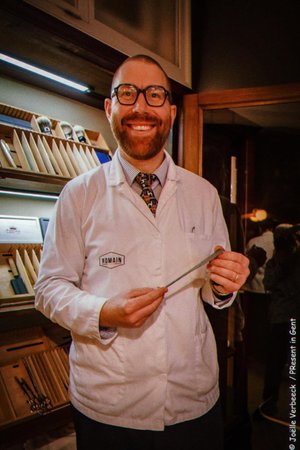
🇳🇴 FROM OSLO TO GHENT — THE ART OF STARTING AGAIN
Two Days with Theo Wintermark at Scapicchio Academy Level 2
There's something fascinating about the people who travel hundreds of kilometres to learn a craft that most of the world considers outdated.
In an age where everything is supposed to be faster, easier and more convenient, some people still choose the difficult road.
They choose steel over plastic. Stones over machines. Patience over shortcuts.
And sometimes, they travel all the way from Norway to Belgium to understand why.
This is the story of Theo Wintermark.
A barber from Oslo, an entrepreneur with ambition, and someone who reminded me that learning a traditional craft isn't always a straight line.
Sometimes, you need to find your motivation again.
A Second Chance at the Craft
Theo's journey with the Scapicchio Academy didn't begin in Ghent.
It began in Bovino, a small town in southern Italy where the Scapicchio family's barbering traditions have been passed down through generations.
He had already completed Level 1.
I wasn't his instructor during that experience, and when we eventually spoke, I understood that he still had questions about the techniques, the sharpening process and the tools he had been working with.
Something was missing.
Not necessarily ambition.
Perhaps simply the confidence that comes from understanding what you're doing.
Fortunately, there's something beautiful about the international community we're building.
People talk.
They exchange experiences.
And sometimes, they encourage one another to take another step.
In Theo's case, that person was Pauline Dissac, a French barber who had already joined me for Level 2 in Ghent.
Pauline knew what we were teaching, how we approached the craft and what Theo could expect.
She encouraged him to continue.
And he listened.
While travelling with his family, Theo managed to free up two days to visit Ghent.
Two days away from his holiday.
Two days dedicated entirely to razors, stones and the uncomfortable but necessary process of learning something difficult.
I respect that.
A Norwegian Gentleman with a Vision
Theo isn't the loudest person in the room.
Quite the opposite.
He's calm, thoughtful and observant.
But behind that quiet personality, there's an entrepreneur.
Back in Oslo, Theo runs an exclusive barbershop with its own bar and cocktail concept.
A place that offers more than a haircut.
And although he's currently working alone, he has ambitions to expand.
He wants to build something.
Something with character.
Something that reflects his own understanding of hospitality, craftsmanship and the experience a gentleman should receive when walking into a barbershop.
Naturally, traditional straight razor shaving is part of that vision.
And that's where our work began.
The Left-Handed Barber
There's one detail about Theo that made our two days particularly interesting.
He's left-handed.
Now, being left-handed isn't a problem.
But learning traditional shaving in a world where most demonstrations, techniques and teaching methods are designed around right-handed people can present additional challenges.
The position of the body changes.
The movement of the wrist feels different.
The angle of the blade needs to be understood from another perspective.
And when you're working with an extremely sharp piece of steel against someone's skin, those details matter.
Fortunately, I have an advantage.
I'm ambidextrous.
I can shave with both my left and right hands.
That allowed me to demonstrate the techniques from Theo's perspective rather than simply asking him to mirror movements designed for a right-handed barber.
And that makes a difference.
Because teaching isn't about showing someone how good you are.
It's about finding a way to make them understand.
A good teacher doesn't expect every student to learn the same way.
Sometimes, you have to change your own approach.
Seven Steps. One Understanding.
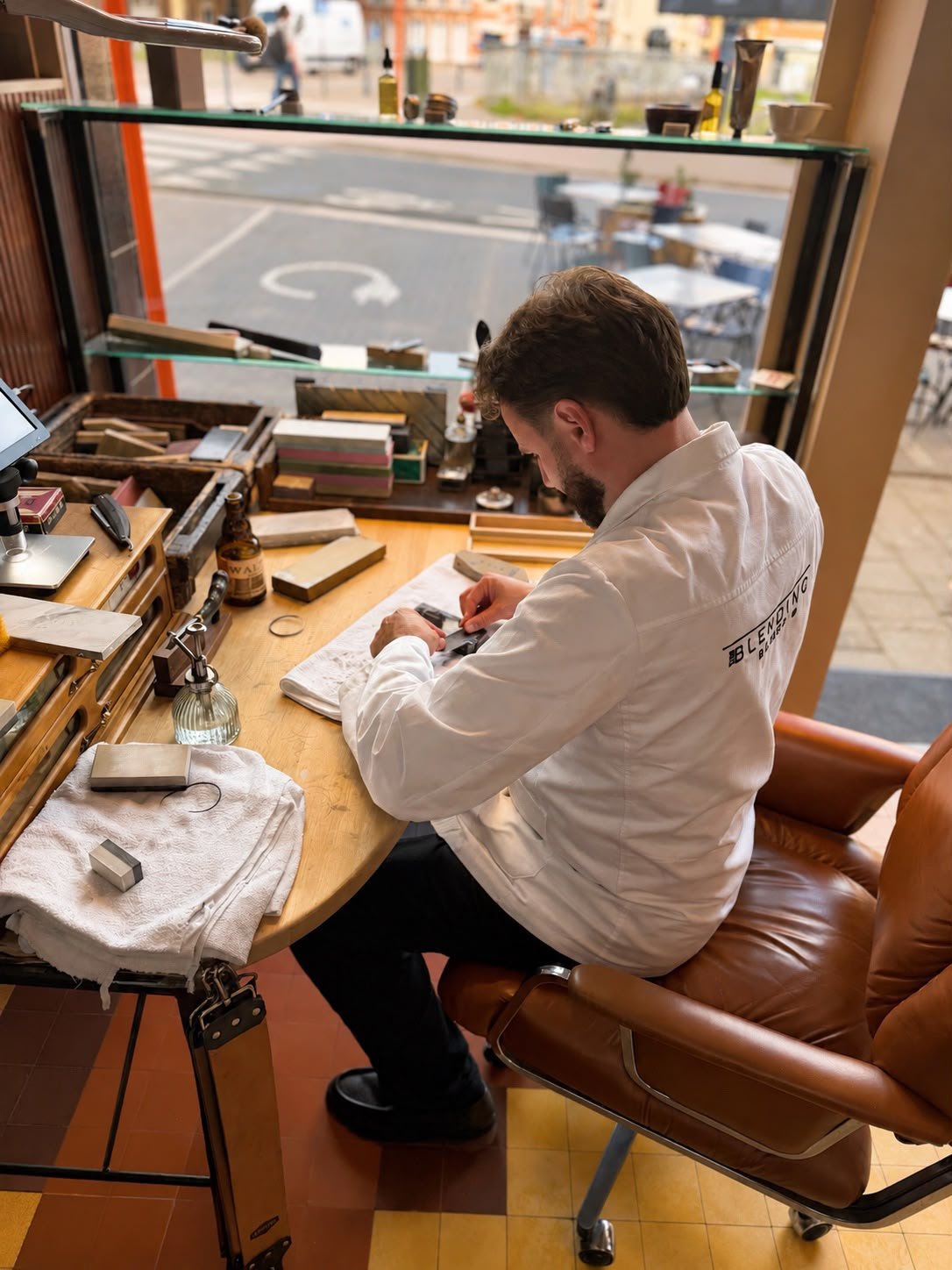
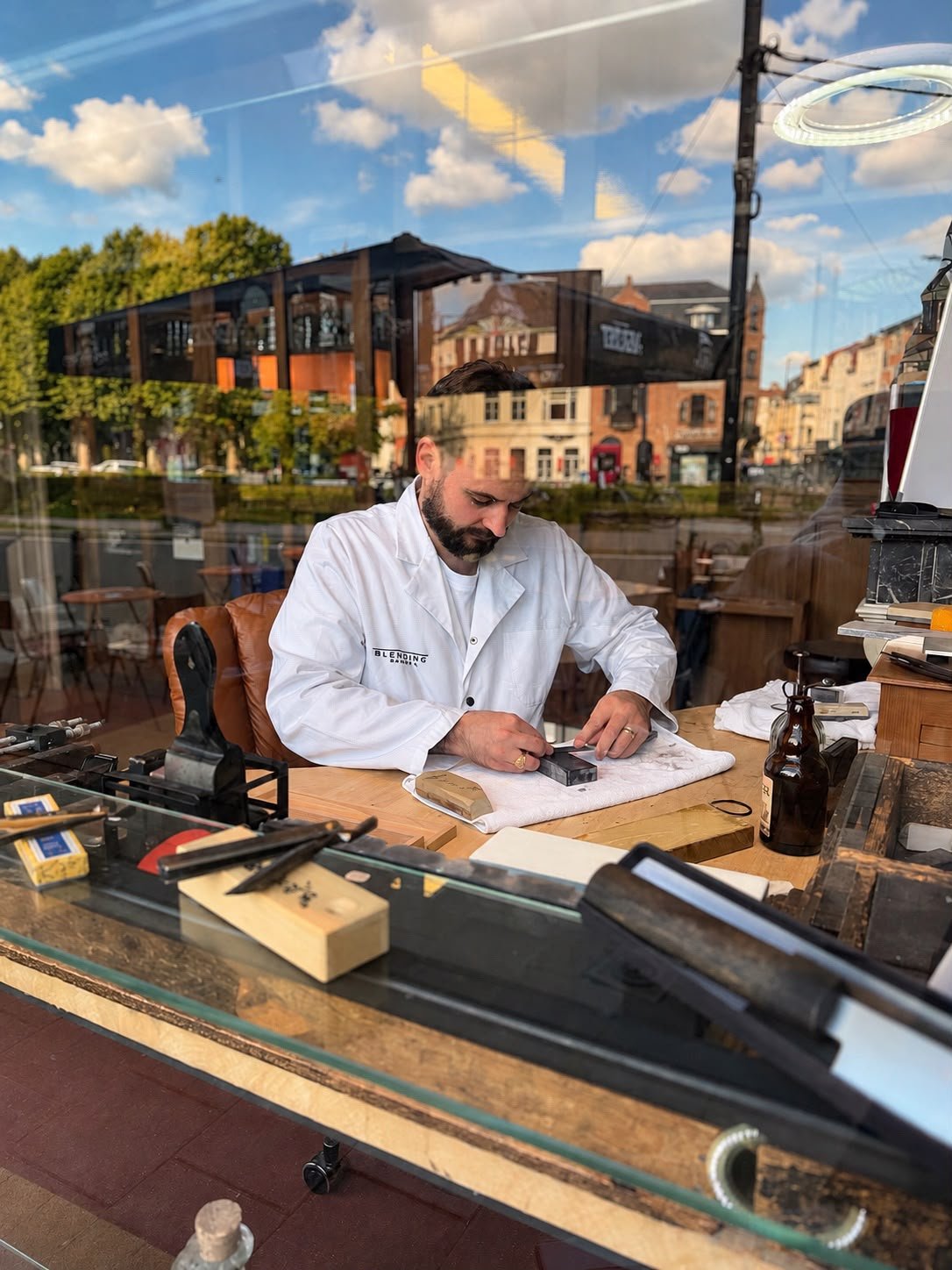
Our first day was dedicated to theory, demonstrations and sharpening.
A lot of sharpening.
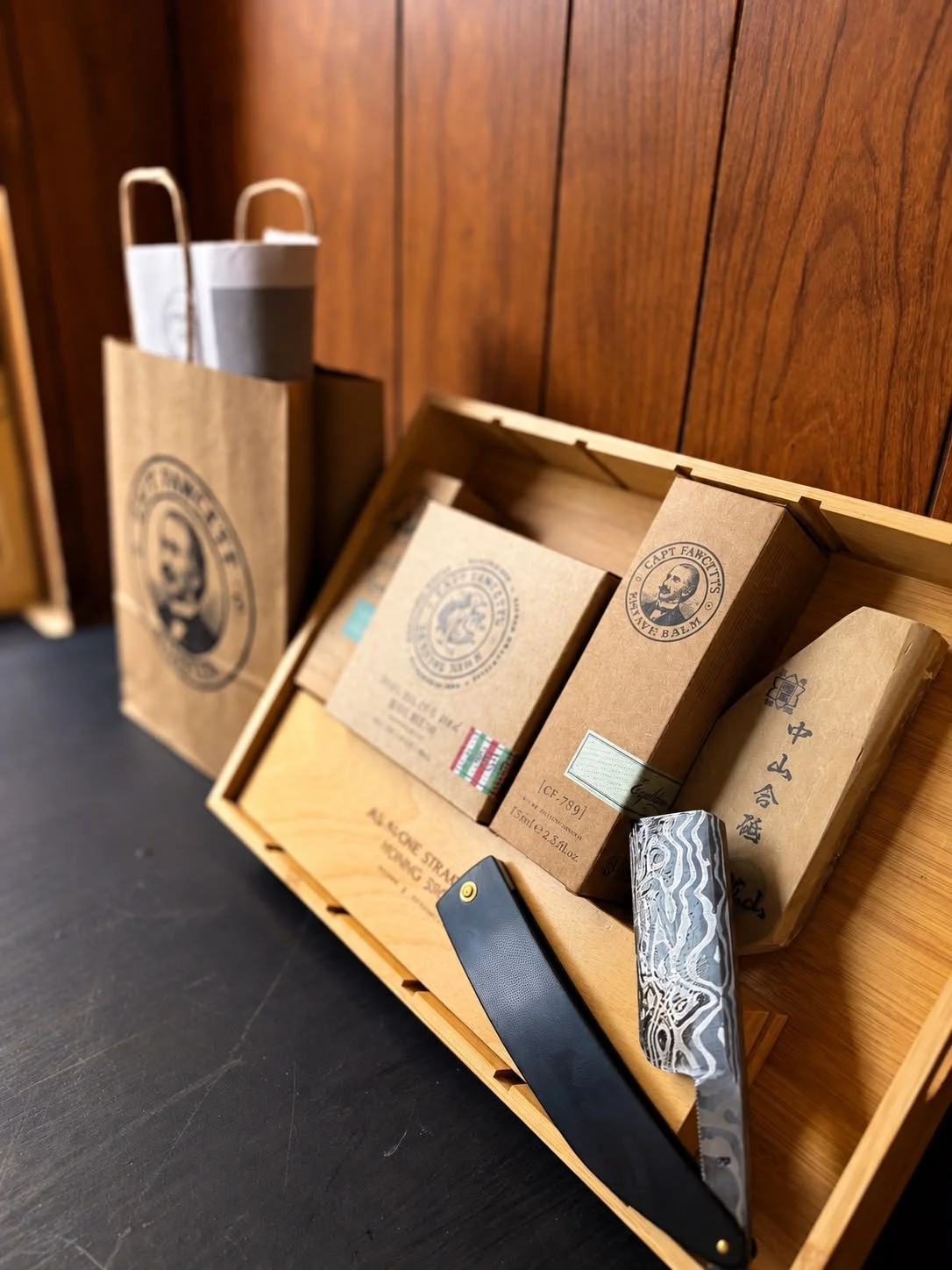
Theo hadn't yet become familiar with the seven-step process of our ROMAIN All-in-One Honing Kit, which forms an important part of the Scapicchio Academy's sharpening education.
So we started there.
From the fundamentals.
Understanding the blade.
Understanding the geometry.
Understanding what happens when steel meets stone.
A straight razor is a deceptively simple object.
A piece of steel, two scales and an edge.
But behind that edge lies an entire world of angles, pressure, abrasives and geometry.
Get one element wrong, and the result changes.
We began with hollow-ground razors, following the seven-step sharpening process.
Step by step.
Stone by stone.
Not simply memorising movements, but understanding what each stage contributes to the final cutting edge.
Once Theo became more comfortable, we moved towards freehand honing.
No guides.
No shortcuts.
Just the blade, the stone and the ability to control the angle yourself.
We also explored the full wedge, a completely different character of razor that demands its own understanding of geometry and sharpening.
We briefly touched on the Japanese world of kamisori, but our main focus remained on Western straight razors.
Hollows and full wedges.
The tools Theo would most likely encounter and use in his daily professional work.
There's no point trying to master the entire world of razors in two days.
Better to understand the fundamentals properly than to collect techniques you cannot yet control.
The Razor Doesn't Forgive Uncertainty
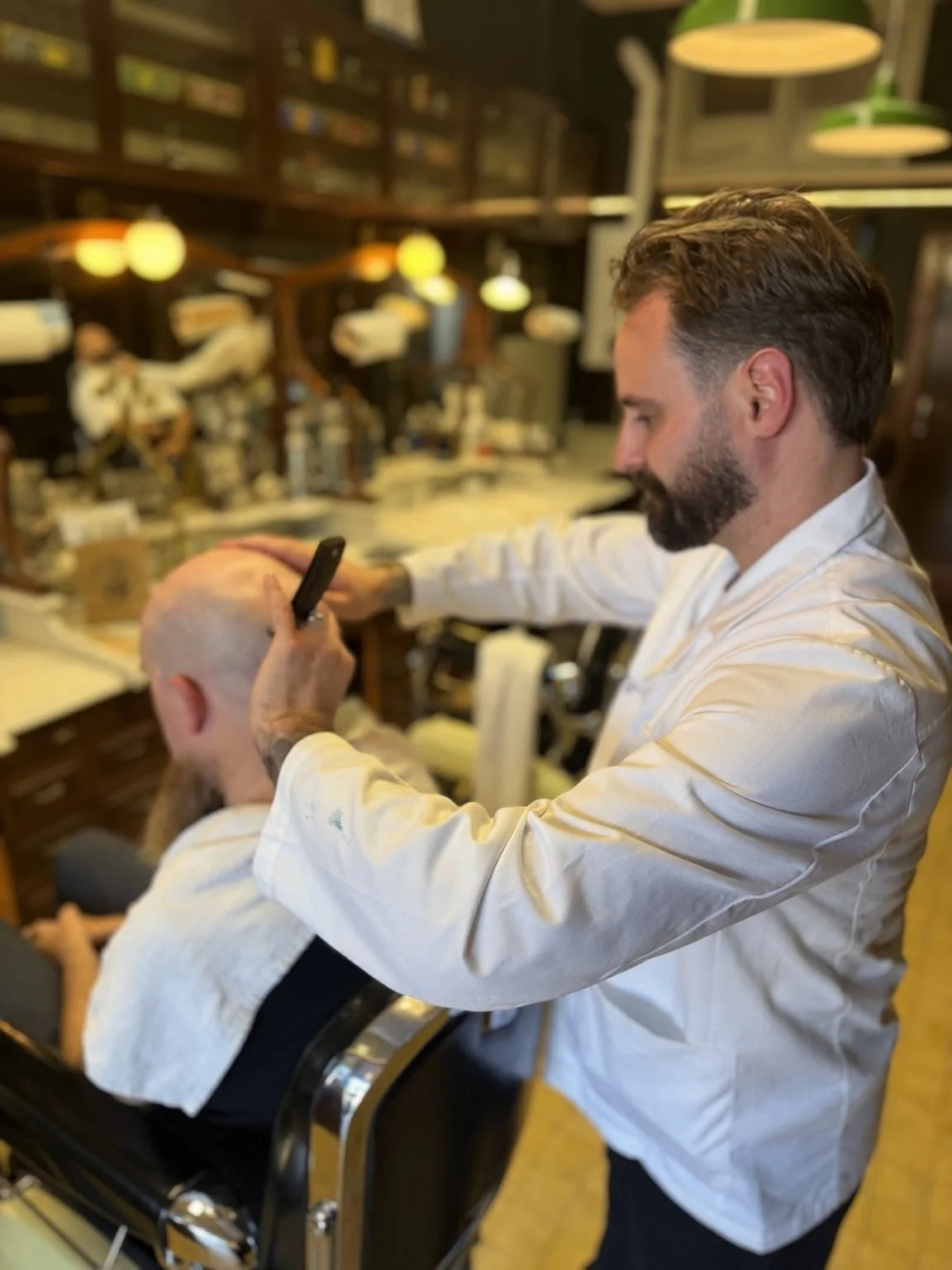
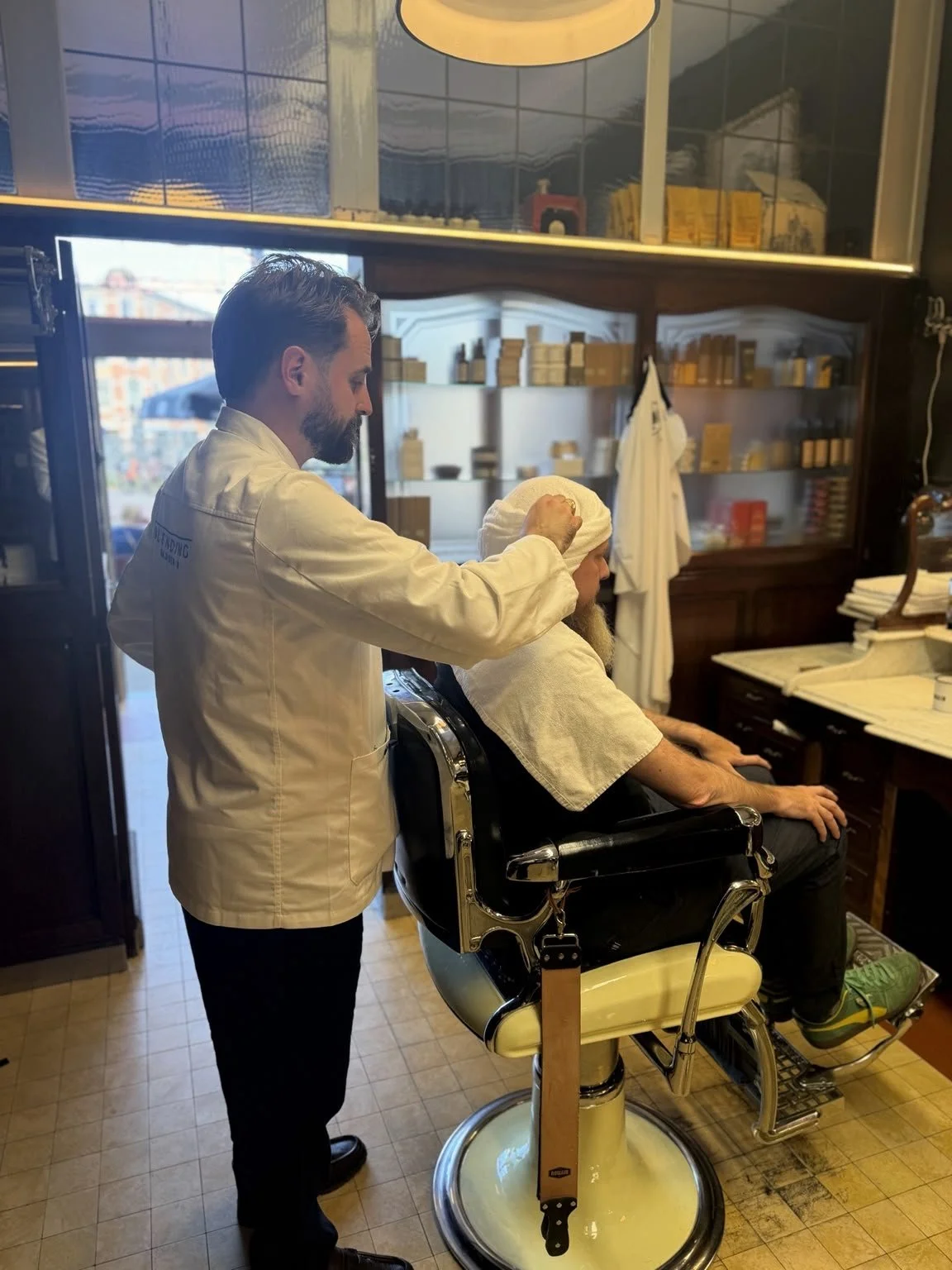
The second day was about putting knowledge into practice.
Real people.
Real skin.
Real razors.
We worked through head shaves, traditional facial shaving and the protocols described in my book, Protocols — A Barber Manual.
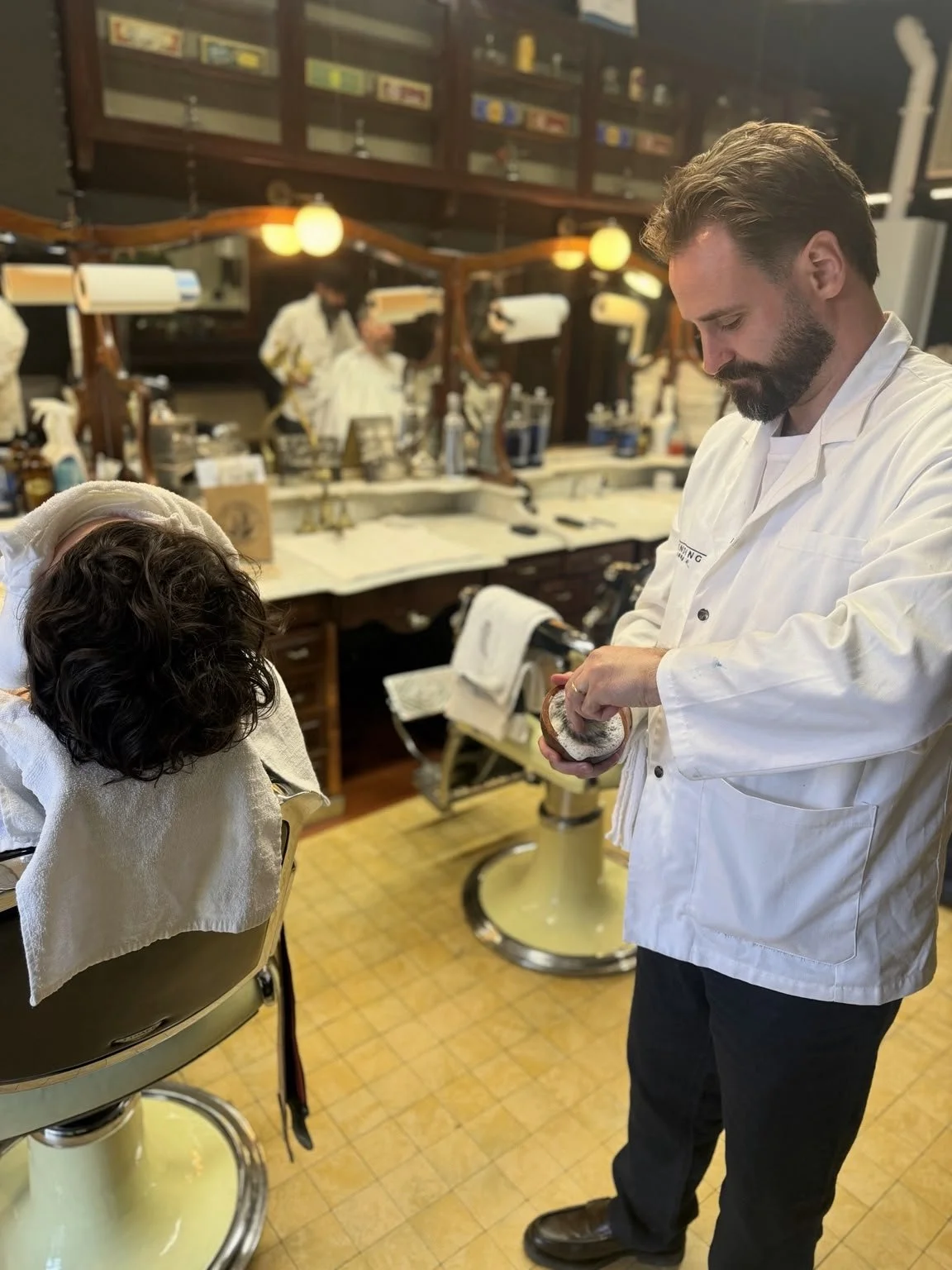
Preparation.
Skin analysis.
Product application.
Blade positioning.
Shaving direction.
Hygiene.
And perhaps most importantly, understanding when to adapt.
Because no two faces are identical.
No two skins react exactly the same way.
And no amount of theory can replace the experience of holding a razor and learning how it behaves against different surfaces.
For Theo, the challenge was to combine everything.
The correct angle.
The correct speed.
The correct position.
And the confidence to execute the movement without hesitation.
Too much pressure, and you risk damaging the skin.
The wrong angle, and the blade won't perform as intended.
Too much uncertainty, and every movement becomes more difficult than it needs to be.
It's a delicate balance.
One that takes time.
And repetition.
A great deal of repetition.
You don't master a straight razor in two days. You learn how to begin mastering it.
That's an important distinction.
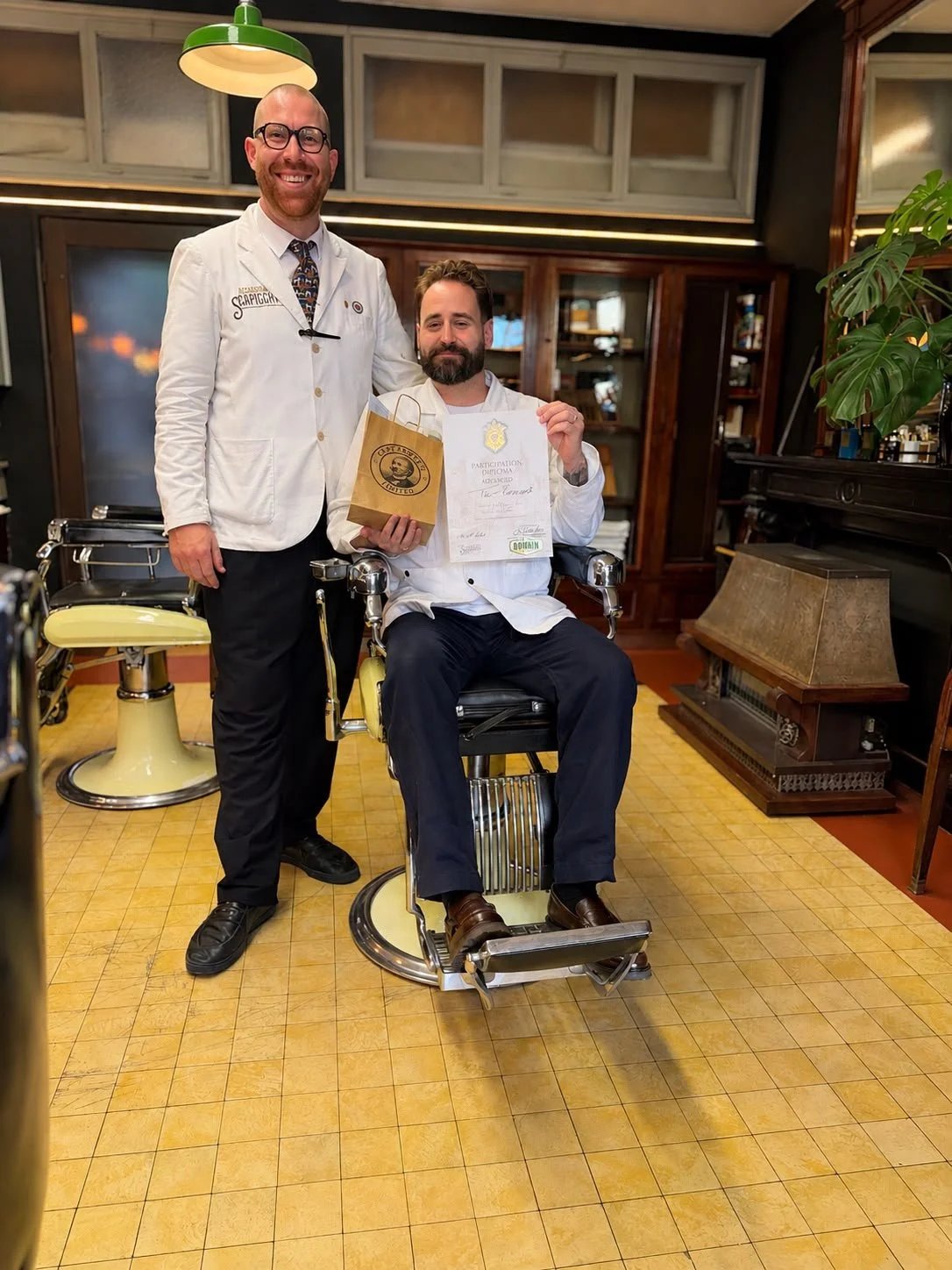
An Academy can provide the structure, the knowledge and the corrections.
But the real work continues long after the diploma has been handed over.
Back in the barbershop.
With the next client.
And the next.
And the next.
From Belgium Back to Norway
Towards the end of our time together, Theo asked whether I could visit him in Norway later in 2026.
He wanted to continue learning.
To practise in his own environment.
To develop his shaving techniques further and become more comfortable integrating traditional straight razor services into his barbershop.
Unfortunately, my calendar was already completely full.
But that didn't mean the conversation had to end there.
I immediately thought of someone.
Maestra Samia Nafi.
A fellow Master Barber within the Scapicchio Academy.
And, importantly, someone who is also left-handed.
I suggested that Theo invite Samia to Norway for additional training.
To repeat the techniques.
To refine the movements.
To work on the details that become clearer only through practice.
And Theo followed that advice.
For me, this is one of the most rewarding aspects of the Scapicchio Academy.
The knowledge doesn't belong to one person.
The students don't belong to one teacher.
And the journey doesn't have to end when a workshop finishes.
We can connect people.
We can recommend one another.
We can continue supporting students even when we're thousands of kilometres apart.
That's what a family should do.
More Than a Diploma
I've always believed that traditional barbering is about more than learning how to hold a razor.
It's about developing an understanding of your tools, your movements and the responsibility you carry when someone places their trust in your hands.
And none of that happens overnight.
Theo arrived in Ghent with questions.
He left with a clearer understanding of the techniques, a foundation to continue practising and a connection to other people within our Academy who can help him grow.
But what impressed me most was his willingness to continue.
He could have stopped after Level 1.
He could have decided that traditional shaving simply wasn't worth the effort.
Instead, he listened to a colleague, travelled to Ghent and dedicated two more days to improving his knowledge.
And when those two days were finished, he was already thinking about the next opportunity to learn.
That's the kind of attitude I admire.
Not perfection.
Progress.
One Family. Across Borders.
There's something rather remarkable about this little story.
A Norwegian barber begins his journey in a small Italian town.
A French colleague encourages him to continue.
He travels to Belgium to train with a Belgian Master Barber.
And his next step takes him back to Norway, where a French Maestra can help him develop further.
Italy.
France.
Belgium.
Norway.
Different countries.
Different personalities.
Different experiences.
All connected through the same craft.
When we talk about the Scapicchio family, this is exactly what I mean.
Not simply a collection of titles, certificates or photographs taken at international events.
But a network of people willing to share their knowledge and support one another.
A community where an ambassador can encourage a fellow barber.
Where a Master can recommend another Master.
And where students can continue learning without being limited by borders.
Because the objective was never to make everyone dependent on one teacher.
The objective is to make everyone better.
Keep Practising, Theo.
Two days in Ghent won't turn anyone into a master.
And they shouldn't.
Mastery requires patience, discipline and the humility to accept that there's always something more to learn.
The razor will tell you when your angle is wrong.
The stone will tell you when your pressure is inconsistent.
And the client will remind you why every detail matters.
But with the right guidance, the right tools and enough dedication, those difficult movements eventually become natural.
Confidence replaces hesitation.
Understanding replaces guesswork.
And the craft begins to reveal itself.
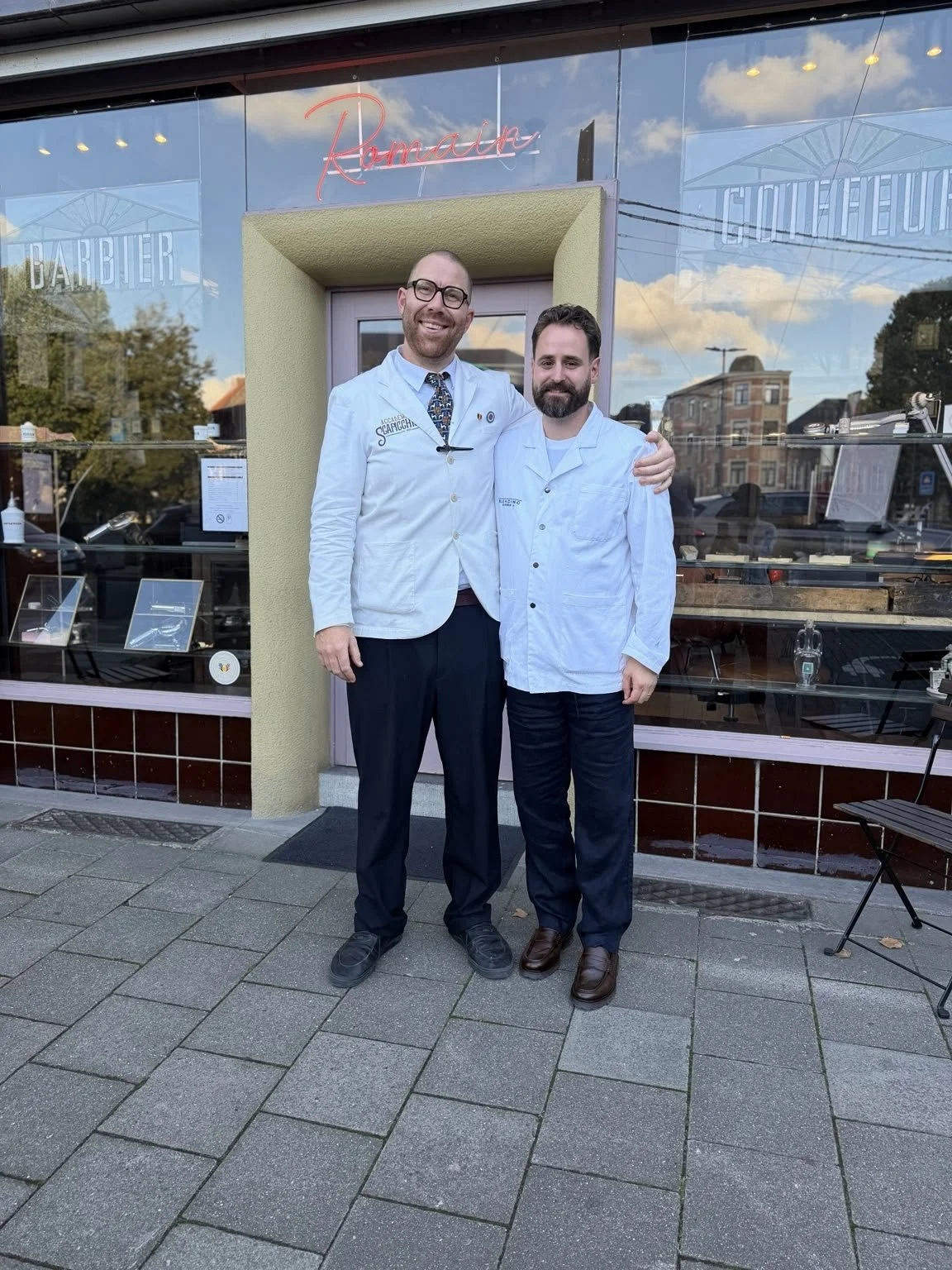
Theo, thank you for making the journey to Ghent.
Thank you for your curiosity, your trust and your willingness to continue learning.
I wish you every success with your barbershop in Oslo and the ambitions you're working towards.
And I hope your next training experience with Maestra Samia brings you another step closer to the barber you want to become.
Keep sharpening.
Keep shaving.
Keep questioning.
And above all, keep practising.
Because traditional barbering isn't something you learn once.
It's something you spend a lifetime trying to understand.
From Oslo to Ghent, and back again.
One craft. One family. A lifetime of learning.
That's the Protocol.
Want to join the Scapicchio Academy at ROMAIN in Ghent, belgium?
Get in touch to plan your 1-on-1 training with Master barber Stijn De Sutter and take your straight razor, honing and shaving services to the next level. Send us a Email
Ready for the real thing?
If you want more than just a good story and you’re ready to sharpen your craft (or your own look), you know where to find us.
From straight razor training and honing on natural stone to classic shaves and serious beard work in the chair, ROMAIN Barbershop & Academy in Ghent is where it actually happens—no noise, no shortcuts.
Book a service in ROMAIN
https://booking.optios.net/6064/select-location
Follow the journey
ROMAIN on Instagram: https://www.instagram.com/romain_ghent
Stijn on Instagram: https://www.instagram.com/desutter_stijn
Stijn on YouTube: https://www.youtube.com/@desutter_stijn
Academy info, courses or questions
Email: info@romainghent.be and we’ll take it from there.
Website ROMAIN: http://www.romainghent.be
Website Scapicchio Academy: http://www.scapicchioacademy.com